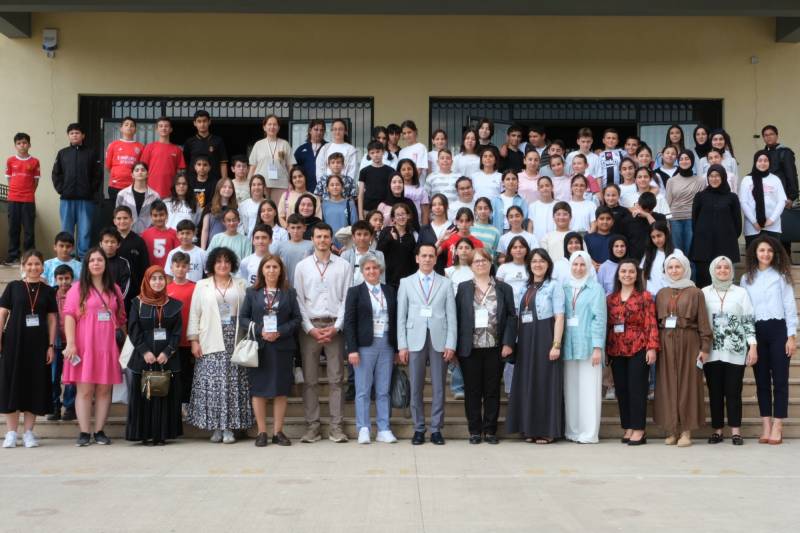
Prof. Dr. Çiğdem Çağlayan delivered an insightful presentation on "Climate Change and its Health Impacts" to a group of middle school students, which included the screening of an educational video on the subject. Following the talk, a dedicated Q&A session allowed students to explore their curiosities further. This was followed by two hands-on applications conducted under the guidance of Prof. Dr. Çağlayan to reinforce the day's themes.
One of these sessions was a waste management workshop led by Research Assistant Dr. Merve Kayabaşı. The activity utilized four small sorting bins and 100 cards featuring various waste items and images. Working in groups of ten, the students first participated in a brainstorming session about the "why" and "how" of waste separation. Each student then took turns selecting a card at random and placing it into the correct bin, receiving detailed guidance on proper sorting techniques throughout the exercise.
In another practical segment, Dr. Durdunaz Ok led a water hygiene application focused on the importance of chlorination for water disinfection. Students observed the process of measuring chlorine levels in two separate bottles—one containing clean water and the other dirty water. By adding orthotoluidine solution to samples in comparator tubes, they watched for color changes and learned how to interpret these results. The students followed these demonstrations with great enthusiasm, and all their questions were addressed in detail.
The event continued with a presentation on "Sustainable Agriculture" by Prof. Dr. Rezzan Kasım from the Faculty of Agriculture. She explained that the transition to sustainable farming has become urgent due to modern agricultural challenges such as soil exhaustion, desertification, erosion, and the misuse of land. Prof. Dr. Kasım touched upon various methods including organic and bio-dynamic farming, permaculture, precision agriculture, and "good agricultural practices." She emphasized the importance of traditional methods that rely on local resources and heirloom seeds to protect our natural environment.
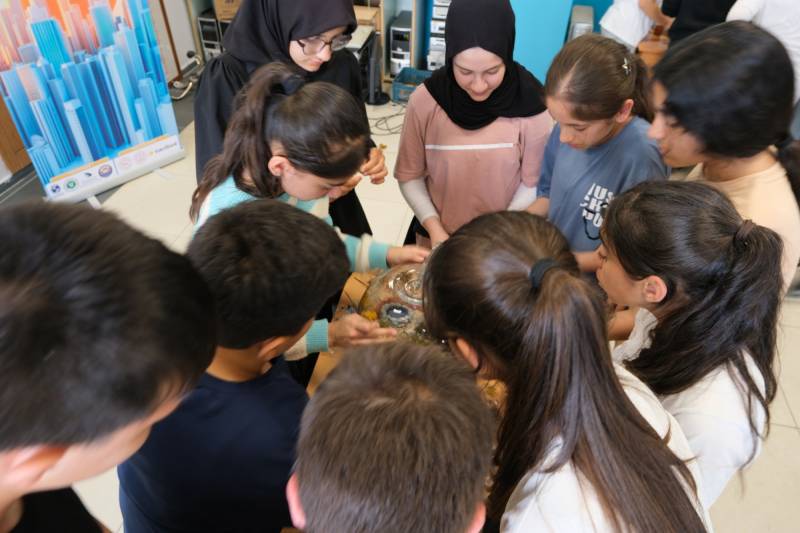
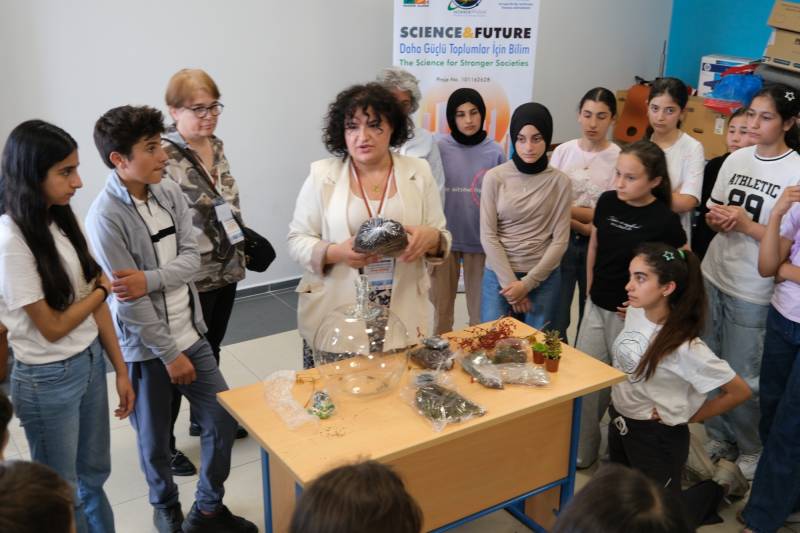
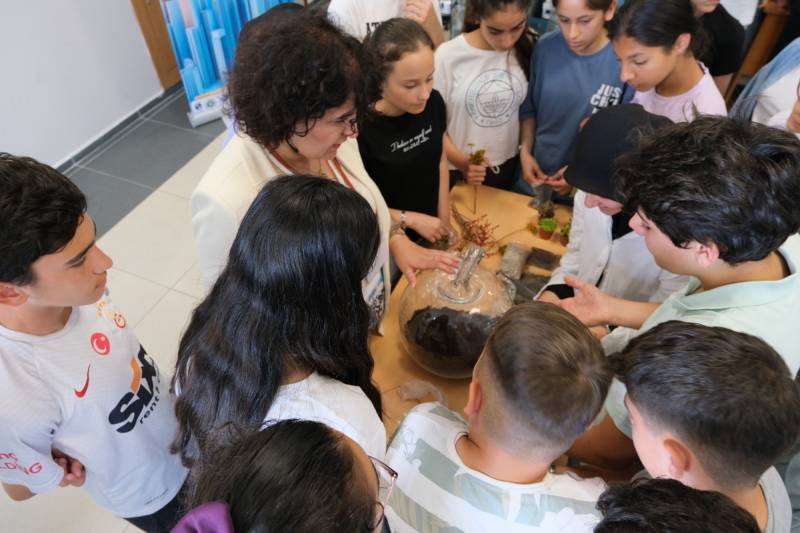
The day concluded with creative workshops where students enjoyed making their own terrariums and exploring hydroponics. In the terrarium session, Research Assistant Melek Demirel guided students as they designed miniature gardens inside apple-shaped glass bowls, fostering both their imagination and an awareness of water-efficient plant growth. Meanwhile, Biosystems Engineer Yusuf Güvenaltın demonstrated soil-less cultivation. Using the nutrient film technique, students saw firsthand how lettuce can be grown in water. By examining the root systems and the circulation of nutrient-rich water, they learned how these systems save significant amounts of water and nutrients.